I co-host a casual podcast with Moe from Moementum Finance where we talk through investing questions from the Blossom community. This week a post from M stood out to both of us because it came across as especially humble. We answered it on the show (embedded below), and since a few minutes of audio can only carry so much, here’s the longer written version of my answer.
Hey everyone! Newbie here, I recently started learning about the stock market. I’m 30 with 4 kids. Our businesses have been doing amazing and I’m finally able to put money aside, with that I created a Vanguard managed portfolio with Wealthsimple (don’t hate me, I wanted to invest and had no idea what I was doing.)
Watching the portfolio it created made me really curious, eager to learn and progress. What advice would you give someone in my shoes? I know managing my own stocks may be highly recommended but I’m just unsure how to start and I don’t want to make terrible decisions that lead to my savings lost.
Also is it a bad idea to invest my retirement into the market? I have $10,000 only at the moment.
Let’s get into it. And for what it’s worth: starting, staying curious, and asking in public already puts you ahead of most people your age, four kids and two businesses notwithstanding.
One translation first, because it clears up half the confusion: when people say managing your own investments is highly recommended, they usually don’t mean picking stocks. They mean buying one simple product yourself instead of paying a management fee for someone to hold a dozen for you. Nobody in that thread wants you researching companies.
Start with what you’re actually holding
The portfolio Wealthsimple built you is their Vanguard Income Portfolio. As of this writing it’s roughly 70% bonds and 30% stocks spread across 13 ETFs: Canadian, US and global bonds (government, investment-grade corporate, some higher-yield), plus stocks from Canada, the US, international and emerging markets with an extra lean toward dividend payers. Wealthsimple rates it 2 out of 10 for risk, and the fees are their usual 0.5% management (0.4% on Premium) plus roughly 0.15 to 0.2% inside the underlying funds.
Honest assessment: it’s a decent product. Professionally run, globally diversified, cheap next to the 2%-ish mutual funds a lot of Canadians still hold, and you can withdraw anytime. By Wealthsimple’s own positioning, it’s built to produce steady income with low volatility, which makes it a legitimately good home for money with a nearby job: a car fund, a renovation, cash that can’t afford a bad year.
Here’s the mismatch, though. Your question was about retirement money, and retirement money at 30 has the opposite job: decades to grow, no appointment to keep. A 70% bond mix smooths out swings you had thirty years to ride through, and the price of that smoothness is growth. Nothing broke. Managed accounts build your portfolio from how you describe yourself, and someone who writes “I don’t want to make terrible decisions that lead to my savings lost” understandably gets handed caution. Reasonable input, cautious output. It just serves a different goal than the one your retirement money has.
What I’d look at instead: all-in-one ETFs
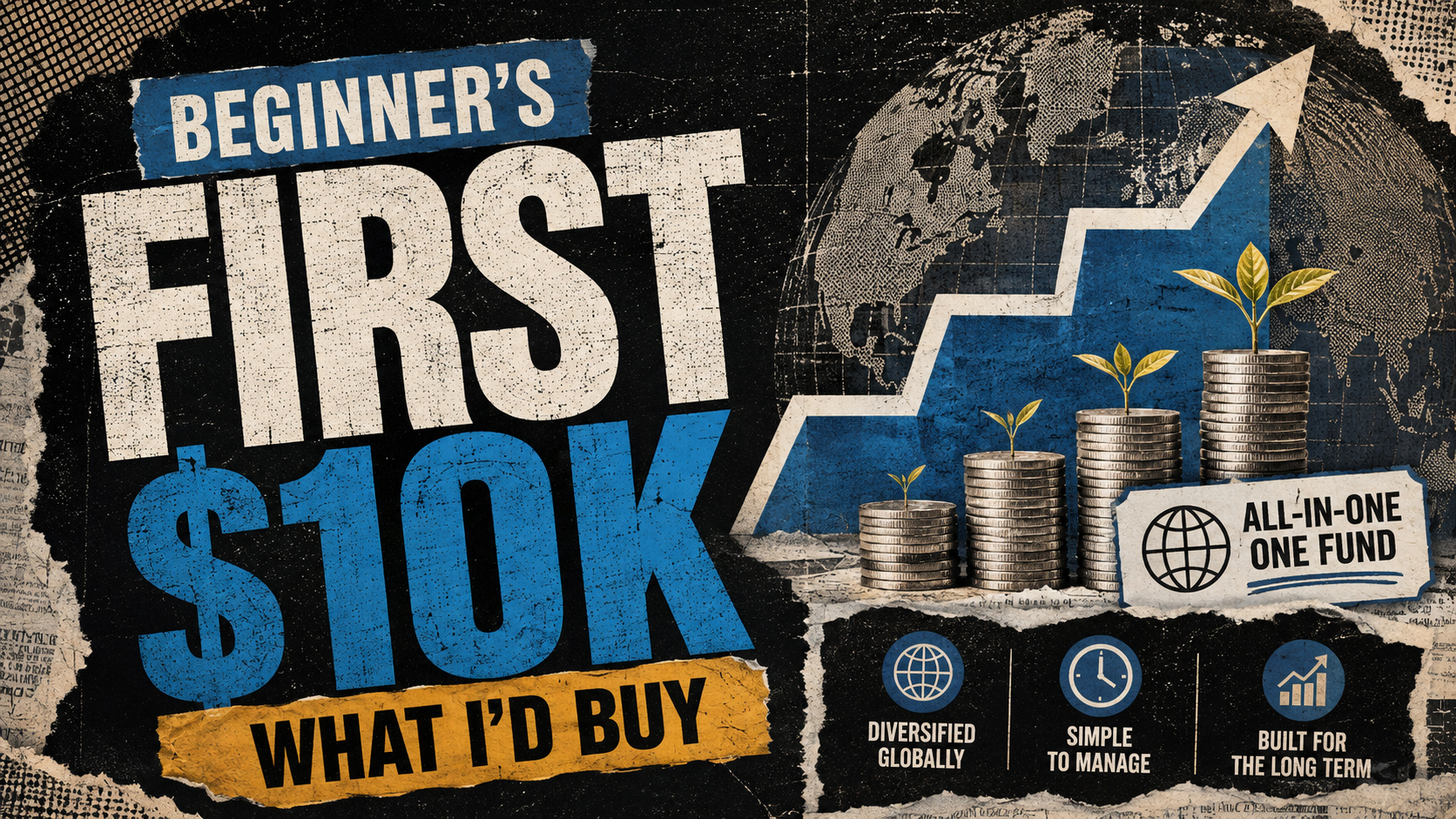
The tool I’d point any beginner to is the all-in-one ETF. One fund that covers the same global ground your 13 ETFs do, at around a 0.2% fee all-in, and it auto-rebalances for you. That’s the key. You don’t have to think about it, and there’s no management layer on top.
Since you’re already in Vanguard products, their lineup makes this concrete. It’s a ladder: VEQT is 100% stocks, VGRO is 80/20, VBAL is 60/40, and it steps down from there to mixes even more conservative than what you hold now. Same idea at every rung; the only difference is how much swing you accept in exchange for growth. iShares and BMO sell nearly identical ladders (XEQT, ZEQT and friends), and the differences between brands are minimal.
On the show, my shorthand answer was “just VEQT it.” The longer, more honest version: pick the rung that matches how much fluctuation you can genuinely sit through, and put the $10,000 in that one fund. For 30-year money, most people belong higher up the ladder than they first guess, and the test I trust more than any questionnaire is this: choose the most aggressive rung you’d still keep buying into during a crash.
The follow-up questions
M had some follow-up questions after the episode, and they’re ones almost every beginner reaches within a few weeks, so I’ll cover them here in general form. The first was about risk levels: what actually separates a 2 out of 10 from a 9 out of 10? M was already circling the right answer on his own, so my job was mostly to confirm it. The number measures how much the ride swings along the way. It says nothing about your odds of losing everything. A high setting on a diversified portfolio doesn’t mean it’s likely to blow up. It means bigger ups and downs in exchange for more growth, and a low setting trades that growth away for a smoother line. Most beginners read the dial as a danger meter and pick something far too cautious for 30-year money.
The other one comes up constantly: whether holding two similar funds, say VEQT plus its iShares twin XEQT, adds a layer of safety. It doesn’t, and it’s worth understanding why. They’re near-identical portfolios from two different companies, holding thousands of the same stocks. If one ever crashes, the other crashes in the same hour, because the crash would be the world’s stock market, and both funds simply are the world’s stock market. No harm in owning both. Just know the real diversification is already inside either one.
Both follow-ups point at the same habit, and it’s worth building early: know roughly what your fund holds. Not the exact tickers, just the shape. How much is stocks versus bonds? How much Canada versus the rest of the world? Once you can say “VEQT is 100% stocks spread across the planet, and VBAL is the same thing at 60/40,” you can see at a glance why VEQT and XEQT are twins, why owning both doesn’t add safety, and why a 70% bond mix was an odd fit for retirement money. Every fund page publishes this, and it’s a five-minute read that prevents most beginner mistakes before they happen.
Is investing your retirement in the market a bad idea?
Your last question, and the answer is no: investing it in the market is what retirement saving is. The market, through a diversified fund at your risk level, is precisely where 30-year money belongs. And about the amount: $10,000 isn’t a retirement fund, it’s the start of one. At 30, that start plus steady contributions plus three decades of compounding is the entire method, and beginning small while you’re still learning means any early stumbles cost you very little. The only version of this that worries me is the one where fear keeps the money waiting until 45.
One last piece of advice you didn’t ask for: once it’s invested, don’t check it every day. That was literally the title of the episode. A daily glance shows you a loss almost half the time no matter how well things are going, and beginners who stare tend to tinker. Set up the automatic contribution, then go run your businesses and raise your four kids.
If you want the full path laid out, from opening the account to picking your fund to what risk actually means, my Investing for Beginners Cheatsheet is free and written for exactly where you’re standing. Welcome aboard. You’ve started better than you think.
When I publish something new, an article, a guide update, or a video worth your time, I’ll send one short email. No spam, no schedule, unsubscribe anytime.