The S&P 500 fell 8.6% in the week ending November 20. When Moe asked what we should cover on Financial KarMoe, people wanted to know how long the selloff might last. The same worry came up on Reddit.
“Buy more VEQT/XEQT or wait next week?”
After a week like that, it can feel like the slide has just begun. People trading at Friday’s lower prices have already seen a lot of the same bad news. Some expect businesses to earn less. Others are willing to pay less because there’s more uncertainty. The next move depends in part on how things turn out compared with what people expect now. Stocks can go up while the news still sounds bad if it’s less bad than people had expected.
Say I have $500 from my next paycheque to invest. I can buy my usual global stock fund or leave the money in cash and see if I get a better price. For money I won’t need for years, I’d keep buying on schedule.
That’s the decision I was getting at in this video. In blackjack, the rules and how the player plays let me calculate the house edge. In one run of my simulation, the house lost money after 5,000 hands even with a 2% edge. Under the same conditions, it still has a reason to deal another hand.
With stocks I have to estimate the edge itself. I can come up with a rough range for what stocks might earn above cash. Nobody can tell me the exact number. The market could fall again right after my next purchase. I’m willing to buy anyway because I still expect a broad global stock fund to earn more than cash over time.
What am I counting on when I zoom out?
“Zoom out” and “that’s why I’m an income investor” are two answers I hear on red days. I can see why both help. A longer chart shows how the market has done over time. A deposit tells you the cash came in this month. If I’m new to this, I’d still have a question about each. Why should I expect stocks to earn more than cash from here? And how much does a steady deposit tell me about how my investment is doing?
When I buy a global stock fund, I’m buying a share of what thousands of businesses can earn for their owners. A company can pay some of that money out or reinvest it in the business. If the reinvestment works, shareholders have a claim on a business that can earn more. How much I make still depends on what I paid for that claim. I can buy into a growing business and get a lousy return if the price already assumed even faster growth.
Stockholders get what’s left after the bills and debts are paid. In a recession, a lot of companies can earn less at the same time, right when my own job might feel less secure. Owning companies around the world helps me if one company or country has a bad run. I still have to be willing to hold them when businesses are struggling in many places at once. If investors could expect the same return from short-term government bills, why take on that extra risk? For a given set of expected profits, a lower price makes stocks more attractive to hold. The extra expected return over bills is the equity risk premium.
Say recession worries take a global ETF from $50 to $45. The people buying at $45 can see the same headlines I can. They may expect businesses to earn less, or they may want a bigger potential return to hold stocks through the uncertainty. I’d still start from the assumption that a broad stock fund offers a higher expected return than cash. A lower price alone tells me little about how big that difference is, especially if what I expect the businesses to earn has changed too.
The question I take from market efficiency is whether I know something that gives me a reason to trade at these prices. I can sit in cash and come out ahead if stocks keep falling. For money I’d otherwise invest for the long run, I’d want a better reason to give up the expected extra return than the same recession story everybody’s been reading.
Stocks have generally beaten cash over long periods in the historical record across markets. That’s part of why I’m willing to keep buying. How much I’ll actually earn can still vary a lot. When Aizhan Anarkulova, Scott Cederburg and Michael O’Doherty simulated returns using data from 39 developed markets, some stock investors in those simulations ended up with less purchasing power even after 30 years. I’m willing to take that risk with my retirement contributions. If I need $50,000 for a down payment in two years, the cash I’ve saved plus what I get from selling my investments has to put $50,000 in my bank account by the day the payment is due. The dividends can keep coming and I can still be short if I have to sell at a loss.
Will the fund keep paying me?
If the cash from my portfolio pays for groceries, I care that this month’s deposit came through. I’d also want to know how my investment is doing and whether I can count on the payment next year. Look at BCE. Its stock fell from about $52 at the end of 2023 to $33 a year later. If you held the shares, you still got about $1 per share every quarter from April 2024 through April 2025. Then BCE cut the July 2025 payment to about 44 cents per share. If I’d only looked at the deposits, I could have missed how much value my shares had lost.
Companies generally try to keep the dollar amount they pay per share steady. If a fund mostly passes along the dividends it collects, I’d look at whether the companies it owns can keep paying. A fund can also keep the cash coming for a while by paying out some of the money already in the fund. Either way, if the payout becomes too hard to sustain, a future deposit can be smaller.
Other funds set the payment based on what they’re worth. BMO’s ZBAL.T bases its monthly payments on the fund’s value per unit at the previous year-end. If a fund following that rule is worth 20% less at the next reset, a 50-cent monthly payment would become 40 cents. The balance can fall today and the cash payment can change later.
If I’m living on those payments, I’d check how the fund decides what to pay and whether my budget still works if it sends less. If I’m reinvesting the cash anyway, I’d look at the fund’s total return, which includes both the payouts and the change in what I own.
What happens when buyers pull their bids?
To see what a lower price tells me, I think about something that trades a lot less often than a stock.
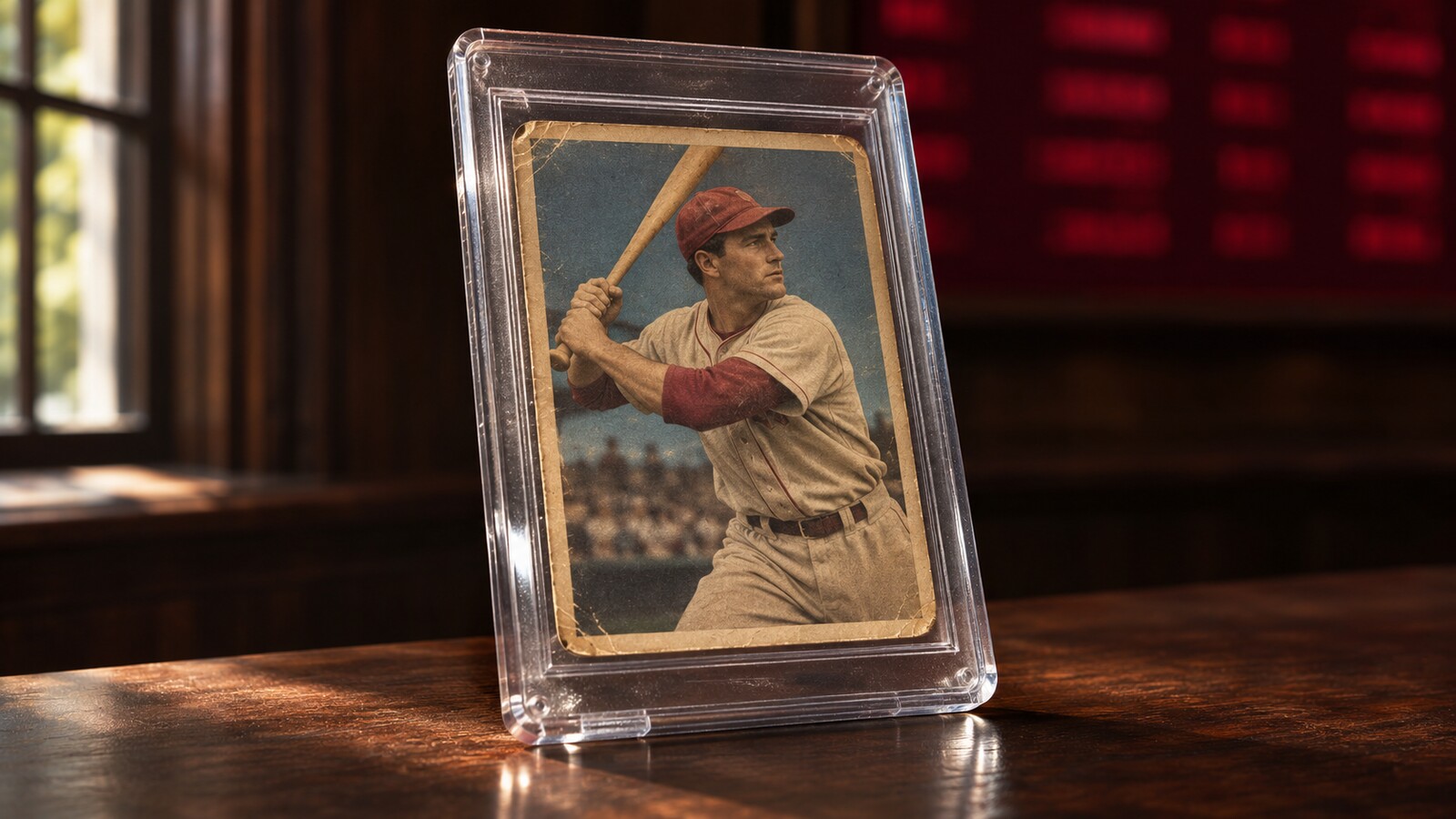
Say the last sale of a particular baseball card in the same grade was $1,000. Yesterday there were people willing to pay $990 and $975. This morning they both pull their offers. Maybe they saw another collector struggling to sell one. Maybe they want to wait and see. Now the best offer you can find is $850. Nobody has traded a card yet. The last sale still says $1,000, but if you need to sell yours right now, $850 is what you can get from the buyers you know about. If you take that offer, $850 becomes the new sale everyone points to.
A stock has an order book full of bids like that, with a price and a number of shares at each level. In the animation from my investing cheat sheet, press Play and watch the buyers on the left and the last traded price at the top. A buyer can cancel a bid and change what’s available immediately. The last traded price updates when someone actually trades.
Now imagine a company says sales will grow less than people expected. Buyers who were willing to pay $50 might lower their bids to $49. If a lot of people also want out quickly, their orders can use up the bids near $49 and start filling closer to $48. A study of 50 U.S. stocks found that when fewer shares are available to trade at the best quoted prices, the same shift in buying or selling pressure tends to move the stock price more. That’s one way lower liquidity shows up.
- Buyers lower bids
- Sellers rush to exit
- Trades settle near $49
Trades settle around $49 in this example. The rush to sell has eased, and people are still trading below $50 after the company lowered its sales outlook. The regulators’ report on the 2010 flash crash documents how fast selling and thinning bids can feed on each other. A real selloff can keep going, and a rebound alone won’t tell me why it started.
“Things are on sale, deploy capital!”
Back to the stock at $49. Would I want to buy it at that price if I’d never seen the $50 quote? If I expect the business to earn just as much as before, $49 is a better deal. In this example, people expect less from the business, so I have to decide whether $49 makes sense given that weaker outlook.
For my global fund, I expect to earn more than cash over time by owning a share of thousands of businesses and taking the risk that they disappoint. I already had that reason to buy before the selloff. I’d ask whether I still believe it at today’s price before I call anything a sale.
What would I have known before the drop?
Even if a stock falls further than the news seems to justify, I’d still have to know when to buy. By the time prices have settled enough for me to feel comfortable, I might already be looking at a higher price.
I understand the appeal of looking for a signal. The VIX reflects what S&P 500 option prices imply about volatility over the next 30 days. Breadth tells me how many stocks are participating in the move, and a moving average shows where prices have been. I can learn something from each without knowing whether I’ll get a better price next month. The Fed is worth watching too, though its policy goals are employment and stable prices. A particular level of the S&P 500 doesn’t automatically trigger a rate cut.
The explanation always sounds cleaner after the fact. If someone says a moving average called it, I’d want to see what they wrote down before the drop. When would they have sold? What would have got them back in? What happened the other times the same signal flashed? A 2024 study that revisited published predictors of U.S. stock returns above cash found that many did poorly on data outside the original test. That’s a tougher test than explaining a chart you’ve already seen.
I’d change my plan if I needed the money sooner or realized I couldn’t live with the amount I had in stocks. I can work those out now. Whether this selloff lasts until the new year is a good question for Moe and me to talk about. I’d still want my plan to work if we both got it wrong.